Simply put:
• Hail damage repair typically relies on paintless dent repair (PDR), a method that reshapes metal from behind a panel without sanding or repainting.
• Acting quickly after a storm helps prevent further paint or metal stress and supports a smoother insurance claims process.
• Centennial, CO sits within a region known for frequent and sometimes severe hailstorms, making prompt inspection practical rather than optional.
Hail damage repair restores a vehicle’s body panels after a hailstorm, most often through paintless dent repair, a technique that massages dents back into shape without disturbing the factory paint. The approach works best when addressed soon after a storm, before dust, debris, or additional weather exposure complicates the repair.
Hail damage repair depends heavily on whether the paint surface remains intact. When it is, technicians can access the underside of a panel and push dents out gradually, preserving the original finish rather than replacing it.
What Happens During the Repair Process
Paintless dent repair follows a fairly consistent sequence regardless of vehicle make or model. Understanding each stage helps set realistic expectations for timing and outcome.
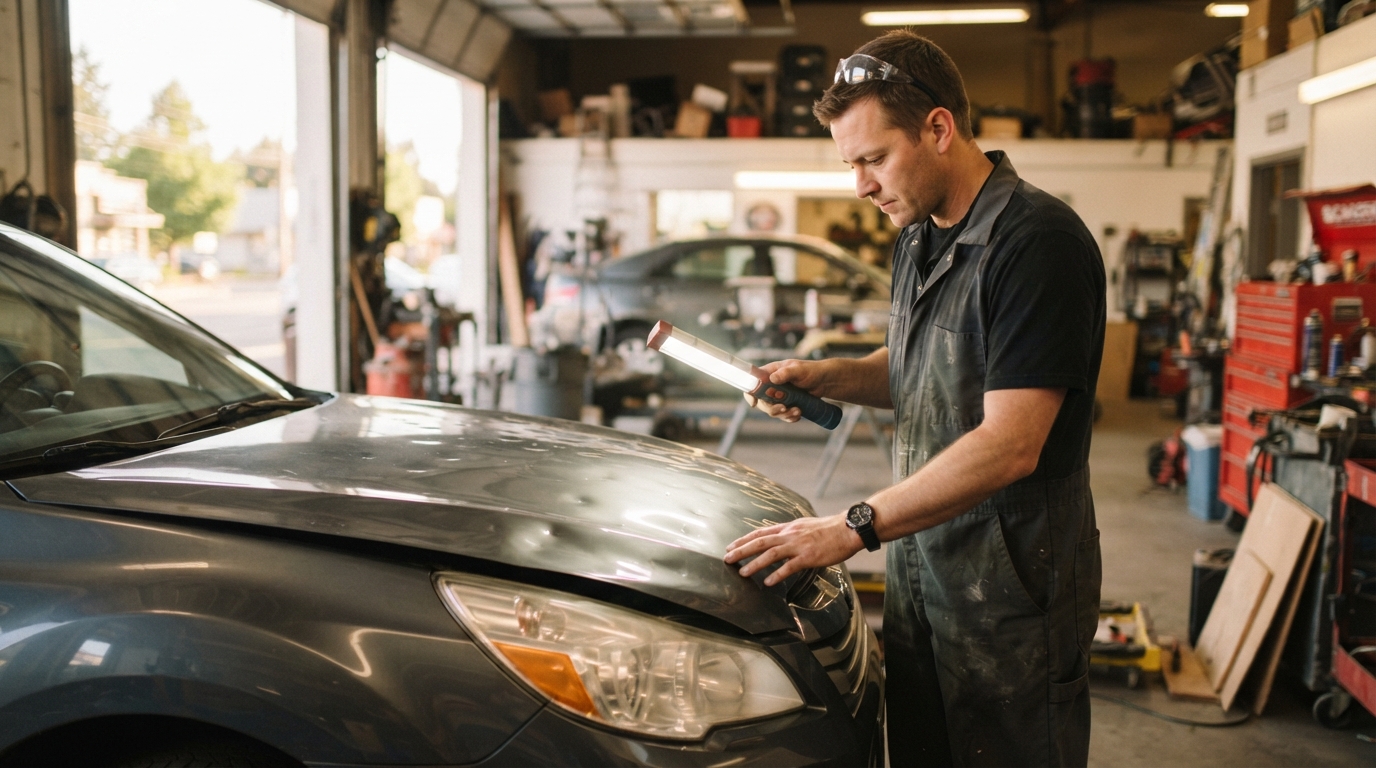
• Inspection – technicians examine the roof, hood, trunk, doors, and trim for visible dents and assess paint condition.
• Access and technique selection – panels may be accessed from behind using specialized tools suited to the dent’s size, depth, and location.
• Dent manipulation – metal is pushed, massaged, or lifted back toward its original contour without sanding or filler.
• Final inspection – panels are checked under angled light to confirm consistent surface quality.
Paintless dent removal uses special molded tools on the underside of vehicle panels to push out and smooth dents, so the painted surface is not disturbed. This matters because common practical uses for paintless dent repair include the repair of hail damage, door dings, creases, body and feature line dents, and minor collision damage. Not every dent qualifies, however. Factors such as paint damage, stretched metal, or an already repainted panel can inhibit the success of a PDR repair.
When Conventional Repair Is Needed Instead
Deep dents or damage that has cracked the paint sometimes require a different approach. Conventional vehicle repair works mostly on the exterior, pulling out dents and filling irregularities with body filler, and while the method is most effective on deep dents, repair time is generally longer because the repaired area must be primed and repainted.
| Repair Method | Paint Impact | Typical Timeframe | Best Suited For |
| Paintless Dent Repair (PDR) | Original paint preserved | A few days | Shallow to moderate dents with intact paint |
| Conventional Repair | Requires priming and repainting | Longer than PDR | Deep dents, cracked paint, stretched metal |
Why Timing Matters After a Storm
Delaying an inspection after a hailstorm can allow minor dents to go unnoticed until they affect resale value or become harder to document for an insurance claim. Colorado’s Front Range, which includes Centennial, CO, sits within a region climatologists describe as hail-prone. According to the NOAA National Severe Storms Laboratory, Nebraska, Colorado, and Wyoming typically record the most hailstorms in the country, with the zone where the three states meet averaging seven to nine hail days a year.
Because severe weather in this region tends to arrive in clusters during spring and early summer, scheduling an inspection promptly after a storm allows more repair options and clearer documentation. Waiting weeks or months can mean dust settles into dents, trim ages unevenly around the damage, or secondary weather events add new dents that complicate claim estimates.
Business Info
Auto Hail and Dent Center checks the roof, hood, trunk, doors, and trim for visible dents after storms and explains repair choices, documentation needs, and timing considerations for drivers. Based in USA, the business serves customers across Centennial, CO, without maintaining a physical office in that specific area.
Frequently Asked Questions
Does hail damage always require repainting? No. In many cases, hail damage can be repaired without repainting using paintless dent repair, especially when the factory paint remains intact and the metal has not been overstretched.
Is hail damage repair covered by insurance? Hail damage is covered under comprehensive auto insurance in most cases, though coverage specifics depend on the individual policy and deductible.
How long does a typical repair take? Timelines vary by damage severity, but generally repairs may take only a few days when paintless dent repair is suitable for the vehicle.
Can all hail dents be fixed with paintless dent repair? Not always. PDR may not be effective on large dents or extensive damage by hail, in which case conventional bodywork involving fillers and repainting may be necessary.
Looking Ahead
Hail damage repair outcomes generally improve when vehicle owners schedule an inspection soon after a storm rather than waiting. Current service area information for Auto Hail and Dent Center is published for reference.