At glance:
• Laser facial treatments target uneven tone, sun damage, fine lines, and pigmented spots using controlled light energy.
• Recovery time and results vary by laser type, skin condition, and the number of sessions recommended during a consultation.
• Based in USA, the business profiled in this article serves customers across Nashville, TN with laser-based skin services.
Laser treatment face for uses focused light energy to target specific layers of skin, addressing concerns such as pigmentation, sun damage, and uneven texture without surgery. Results and recovery depend on the laser type, the skin concern being treated, and how many sessions a provider recommends.
Laser treatment face for is one of several non-surgical options people in Nashville, TN research when looking to address visible skin concerns without downtime associated with surgical procedures. The approach relies on calibrated light pulses that penetrate targeted skin layers, prompting the body’s natural repair processes. Providers typically evaluate skin type, sun exposure history, and the specific concern before recommending a treatment plan.
How Laser Facial Treatments Work
Laser devices deliver concentrated light energy that is absorbed by specific targets in the skin, such as pigment cells or blood vessels, depending on the wavelength used. This controlled energy either removes the outer skin layer or heats deeper tissue to stimulate collagen without damaging the surface.
• Ablative lasers remove the top layer of skin to reveal newer tissue underneath.
• Non-ablative lasers heat underlying tissue while leaving the surface intact, which typically means shorter recovery.
• Fractional lasers treat a fraction of the skin surface in a pattern, balancing results with faster healing.
According to the American Society for Dermatologic Surgery, laser resurfacing uses a wand-like laser instrument to remove the upper layers of skin, giving a dermatologist precise control over treatment depth. This precision is part of why many providers consider laser-based options over less targeted alternatives for facial concerns.
Common Skin Concerns Addressed
Facial laser treatments are generally associated with several categories of skin concerns rather than a single issue:
| Concern | Typical Laser Approach | General Goal |
| Sun spots and pigmented lesions | Targeted wavelength lasers | Reduce visible discoloration |
| Fine lines and texture | Fractional or non-ablative lasers | Encourage smoother appearance |
| Uneven tone | Resurfacing lasers | Promote more consistent skin color |
| Vascular lesions | Vessel-targeting wavelengths | Reduce visible redness |
Recovery experiences differ by laser category. A partial-face laser resurfacing takes 30 to 45 minutes, and the full-face treatment takes one-and-a-half to two hours, according to Cleveland Clinic. Swelling, redness, and temporary sensitivity are common in the days following treatment, and providers often recommend sun protection during healing.
What to Expect Before and After a Session
Preparation and aftercare play a meaningful role in how skin responds to laser treatment. A consultation typically reviews skin type, medical history, and realistic expectations before any session is scheduled.
1. Initial consultation to assess skin type and the specific concern being addressed.
2. Pre-treatment guidance , which may include avoiding sun exposure or certain skincare products.
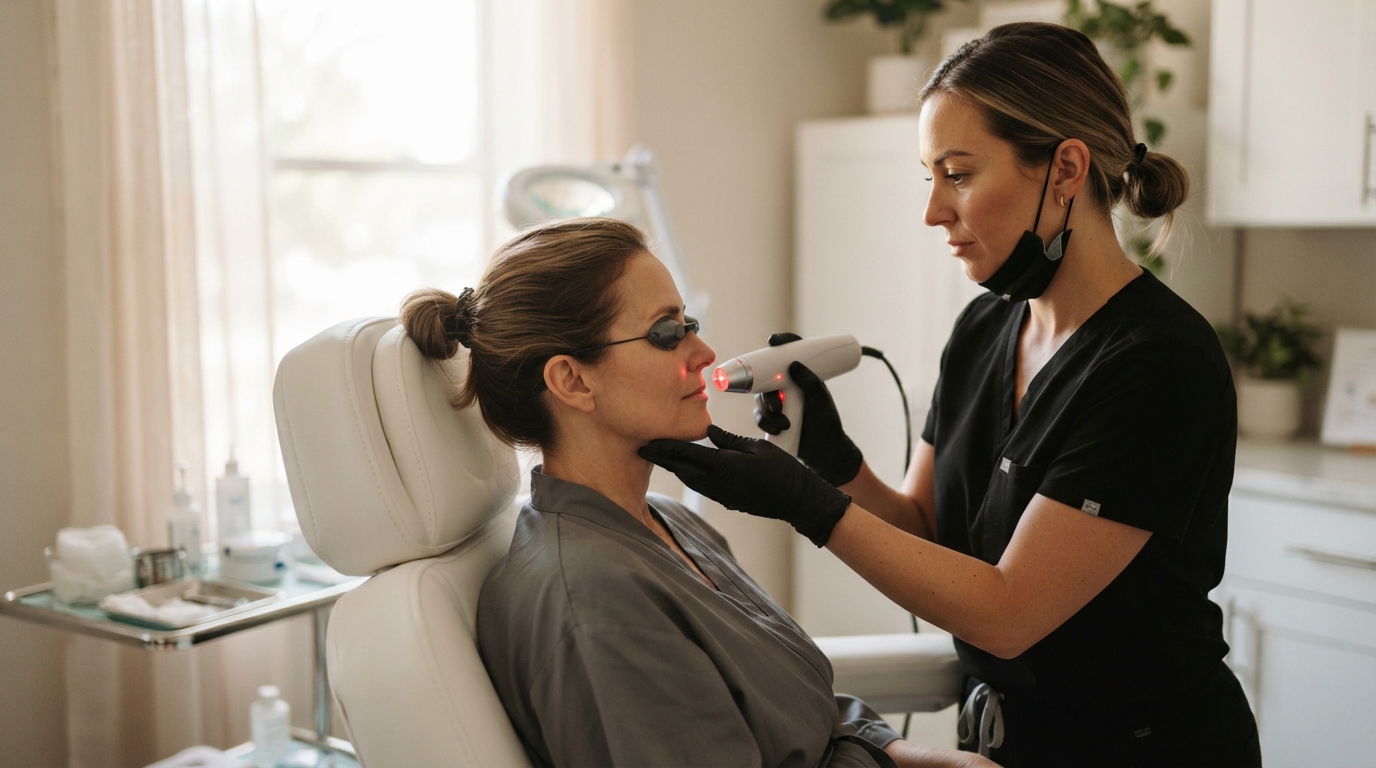
3. The treatment session , where the laser is applied to the targeted area under controlled settings.
4. Aftercare instructions , often involving gentle cleansing, moisturizing, and sun avoidance.
Possible side effects can include temporary redness, swelling, or changes in pigmentation, and a qualified provider will generally discuss these risks during the consultation. Multiple sessions are often needed to reach a visible result, with spacing between appointments allowing skin to heal.
Business Info
The Erasure is a laser treatment provider whose listed offerings include laser facial rejuvenation alongside services addressing pigmented lesions, age spots, and vascular concerns. Based in USA, the business serves customers across Nashville, TN with these laser-based skin services.
Frequently Asked Questions
How many sessions are typically needed for visible results? The number of sessions depends on the laser type and the skin concern being treated; providers determine a recommended schedule during a consultation rather than a fixed number for all patients.
Is there downtime after a facial laser treatment? Downtime varies by laser category. Non-ablative and fractional options generally involve less visible recovery than ablative resurfacing, which can include several days of redness or peeling.
Can laser treatment address sun spots and uneven tone at the same time? Many laser systems are designed to target pigmentation and texture concerns in the same session, though a provider evaluates which wavelength fits the specific skin presentation.
Who should avoid facial laser treatments? People with certain skin conditions, active infections, or specific medical histories may need to avoid or delay treatment, which is why a pre-treatment consultation is a standard step.
Laser treatment for the face remains a widely used option for addressing pigmentation, texture, and tone concerns, with outcomes shaped by laser type, skin condition, and provider guidance. Current scheduling and service details for The Erasure are available for those researching laser-based skin options in the area.