Summary:
• Water stains, missing shingles, sagging areas, and granule loss in gutters are the clearest signs a roof needs professional attention.
• Denver’s hail-prone climate and permit rules make prompt inspection important before small issues become structural problems.
• A licensed contractor can confirm whether a repair qualifies as routine maintenance or requires a City permit.
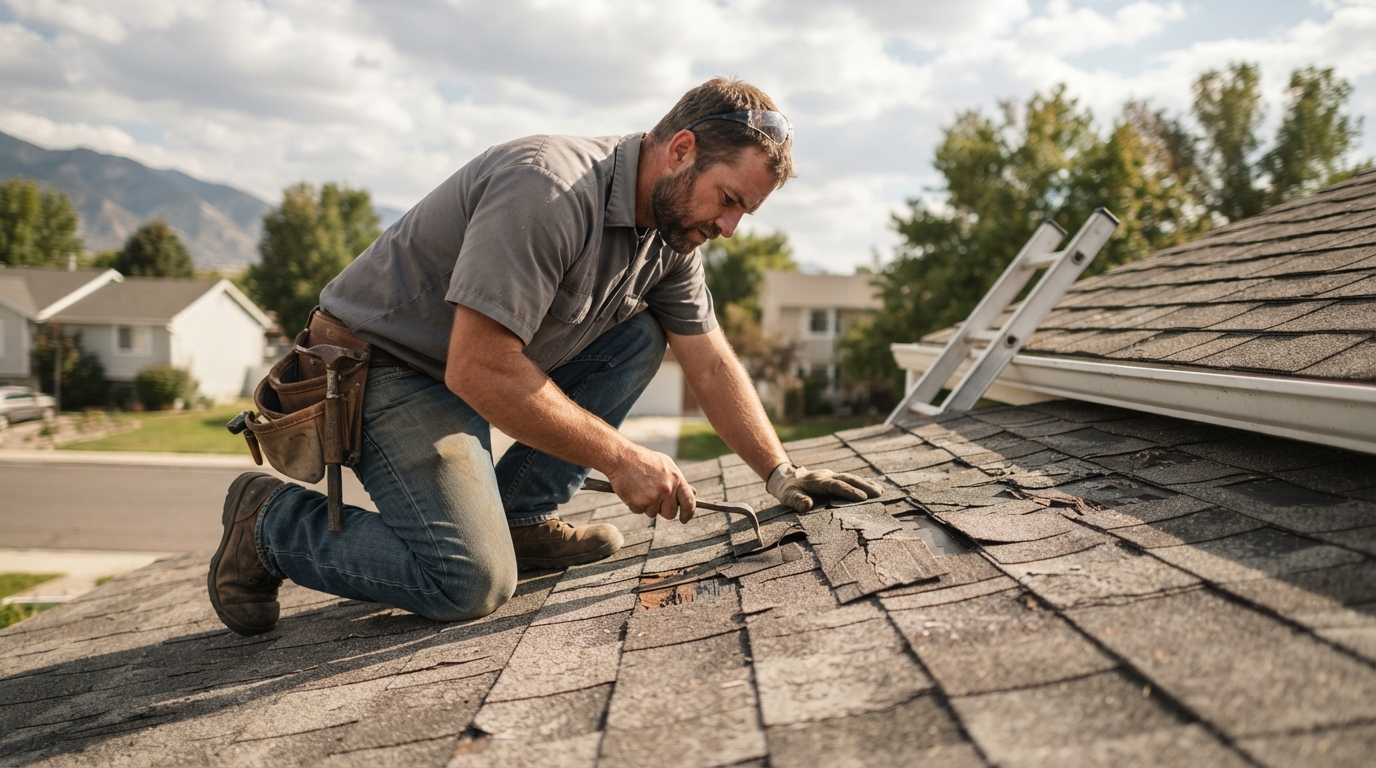
A roof that is leaking, sagging, or shedding shingles after a storm needs evaluation before the damage spreads to decking, insulation, or interior walls. Recognizing these warning signs early, and knowing when to call a residential roof repair expert, can prevent a minor repair from turning into a full replacement.
Denver homeowners face a specific set of pressures that make quick roof assessment more than a convenience. Hail, wide temperature swings, and heavy spring snow all accelerate wear on asphalt shingles and flashing, and the region’s storm frequency means damage can appear suddenly rather than gradually.
Visible Warning Signs That Signal Trouble
Some roof problems are obvious from the ground or attic, while others require a closer look. Homeowners should treat the following as reasons to schedule an inspection rather than wait for the next billing cycle or seasonal check-up:
• Water stains or discoloration on ceilings, walls, or around light fixtures
• Missing, cracked, or curling shingles visible from the yard or a neighboring roofline
• Granules collecting in gutters or at the base of downspouts, indicating shingle breakdown
• Sagging rooflines or soft spots felt underfoot in the attic
• Daylight visible through the roof deck from inside the attic
• Higher than usual energy bills tied to attic air leaks
Any one of these signs on its own may not mean an emergency, but a combination of two or more typically points to active deterioration that will worsen without repair.
Why Denver’s Climate Raises the Stakes
Colorado’s Front Range sits in one of the most hail-exposed regions in the country, and repeated hailstorms can crack or bruise shingles in ways that are not always visible from a ladder inspection. Local code authorities respond to this risk directly: Class 4 impact-resistant asphalt shingles are recommended in many Denver-area jurisdictions to limit storm damage, and wind-zone ratings vary across the city, affecting which materials pass inspection (Denver roofing code guidance).
The City and County of Denver also regulates how repairs are carried out. According to the city’s own guidelines, repairs affecting more than 10% of the roof square footage or two roof squares, whichever is smaller, require a permit for buildings under 25,000 square feet. This threshold matters because a repair that seems minor, such as replacing a damaged section after a hailstorm, can still trigger permit requirements depending on its size and scope.
When a Professional Assessment Is the Right Call
| Situation | Recommended Action |
| Isolated missing shingles, no interior leak | Schedule a standard repair inspection |
| Water stains appearing after a storm | Request prompt evaluation within days |
| Sagging deck or visible daylight in attic | Treat as urgent; structural assessment needed |
| Repair area exceeds roughly 200 sq ft | Confirm permit requirements before work begins |
A licensed residential roofing contractor can distinguish between surface wear and structural concerns, and can advise whether a project crosses Denver’s permit threshold before work starts. Based in USA, Roof Evolution serves customers across Denver, CO, offering residential roofing installation, inspection, maintenance, and repair services for homeowners in the metro area. More detail on the scope of residential work covered is available through Roof Evolution.
Frequently Asked Questions
How quickly should a leaking roof be inspected? A roof leak should be assessed within a few days of discovery, since moisture that reaches insulation or framing can lead to mold growth and wood rot if left unaddressed.
Does every roof repair in Denver require a permit? Not every repair needs one. Permits are generally required when repair work affects more than 10% of the roof area or two roof squares, whichever is smaller, as outlined in the city’s roofing guidelines.
What is the difference between a repair and a replacement? A repair addresses a specific damaged section, such as a leak or missing shingles, while a replacement involves removing and rebuilding the entire roof system, typically chosen when damage is widespread or the roof has reached the end of its service life.
Can hail damage be hidden from a ground-level view? Yes. Hail can bruise or crack shingles in ways that are not visible without a close inspection, which is why many homeowners schedule a check after any significant hailstorm.
Business Info
Current service details for Roof Evolution are published for the Denver, CO service area.