Recap:
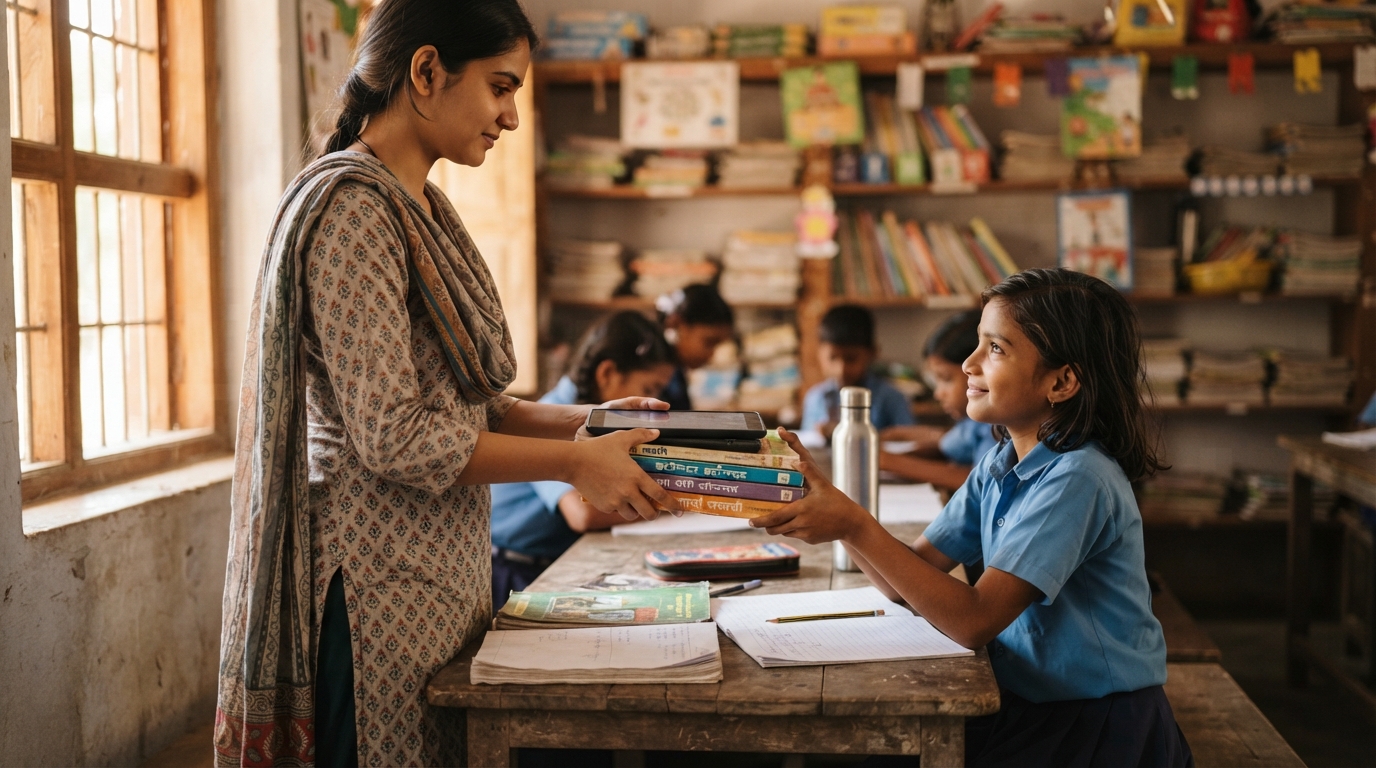
• Education donation in India supports children through food-for-education, book banks, and digital device programs rather than cash grants alone.
• Donated items such as books, computers, tablets, and school meals are routed through verified NGO channels to schools and community learning centres.
• Choosing a program with a clear, documented distribution process helps ensure donated resources actually reach students who need them.
An education donation is a contribution of money, books, digital devices, or meals directed toward helping children access and continue schooling, typically channeled through a registered nonprofit that distributes resources to schools and underserved communities. In India, where millions of children still face barriers to consistent schooling, these donations function as a practical bridge between surplus resources and classroom needs.
Education donation programs generally take one of a few recognizable forms: cash contributions to a general education fund, in-kind donations of books or devices, or sponsorship of ongoing meal programs tied to school attendance. Ratna Nidhi Charitable Trust is one such Mumbai-based organization whose programs illustrate how these categories work in practice, from book banks to food-linked education support. To learn more or get involved, Contact Ratna Nidhi Charitable Trust.
Why Education Donation Still Matters in India
School access gaps remain significant despite decades of policy effort. According to a UDISE+ 2024-25 analysis, around 46 million children in the 6 to 17-year age group are currently out of school in India, representing approximately 17 per cent of the country’s 6-17-year-old population.
A few additional data points help frame the scale:
• UDISE+ 2024-25 reports 6.8 million dropouts annually, roughly 2.5 million at the elementary level and 4.3 million at the secondary level.
• Secondary-stage out-of-school children number around 10.7 million, an out-of-school rate of 22.7 percent.
• Hunger and attendance are closely linked, which is why several nonprofits pair meals with classroom access rather than treating the two separately.
These figures suggest that donation efforts aimed at retention, not just enrollment, address a persistent part of the problem. For readers wanting to review the underlying methodology, the Ministry of Education’s UDISE+ data portal publishes the national school education statistics referenced above.
Common Forms of Education Donation
Donors in India typically choose among a handful of practical options, each suited to different circumstances and budgets.
| Donation Type | What It Involves | Typical Impact Area |
| Food-linked education support | Meals tied to school or informal class attendance | Attendance and concentration |
| Book donation | School and college textbooks, storybooks, Braille materials | Literacy and library access |
| Digital device donation | Laptops, tablets, smartphones for student use | Digital learning access |
| General education fund | Monetary contribution to broader programs | Flexible program support |
Food-linked education support. Some programs distribute daily meals specifically to children attending formal or non-formal classes, using attendance as the qualifying condition. Free, home-cooked food is provided to children attending any formal or informal educational institution under this model, which links nutrition directly to classroom presence.
Book and library donation. Gently used or new textbooks and storybooks are collected and routed to schools, libraries, and community centers that otherwise struggle to stock adequate reading material.
Digital device donation. Laptops, tablets, and smartphones are collected from individuals and companies and directed toward students who need tools for digital education, often with basic educational applications added before redistribution.
How to Choose a Credible Program
Before donating, a few practical checks help confirm that contributions reach intended recipients.
1. Verify registration status. Look for FCRA, 80G, or 12A certification, which indicates the organization is legally authorized to receive and issue tax-deductible donations.
2. Ask about distribution partners. Reputable programs name the schools, NGOs, or community centers receiving donated materials rather than keeping this vague.
3. Check what is actually accepted. Some programs only take specific items, such as books or working electronics, so confirming accepted categories avoids wasted trips or returned items.
4. Review reported outcomes. Programs that track attendance, device distribution counts, or meals served annually tend to offer more transparency than those citing only broad mission statements.
Organizations based in India, including Mumbai-headquartered trusts, often combine several of these donation types under one umbrella, allowing donors to pick a contribution method that matches what they have available to give.
Frequently Asked Questions
What counts as an education donation? It generally includes cash gifts to education funds, physical items like books and digital devices, or recurring contributions such as sponsoring daily school meals for children.
Are education donations in India tax deductible? Donations to organizations holding valid 80G certification are typically eligible for tax deductions under Indian tax law, though donors should confirm current certification before contributing.
Can used electronics be donated for education purposes? Many programs accept used laptops, tablets, and smartphones that still function, often refurbishing them with educational software before passing them to students.
Do education donation programs only operate in large cities? Coverage varies by organization; some concentrate on specific city areas while others extend distribution to schools and learning centers across wider regions of India.
A Note on Verifying Local Listings
Readers researching a specific organization before donating can review how it is listed publicly, including its stated service area and contact details, as a basic verification step. Ratna Nidhi Charitable Trust on Google Maps reflects this kind of published, publicly accessible listing information that donors commonly check before reaching out. This step takes little time and adds a layer of confidence before any contribution is made.